
نمونه سوالات Speaking آیلتس در سال 2026 (بخش دوم)
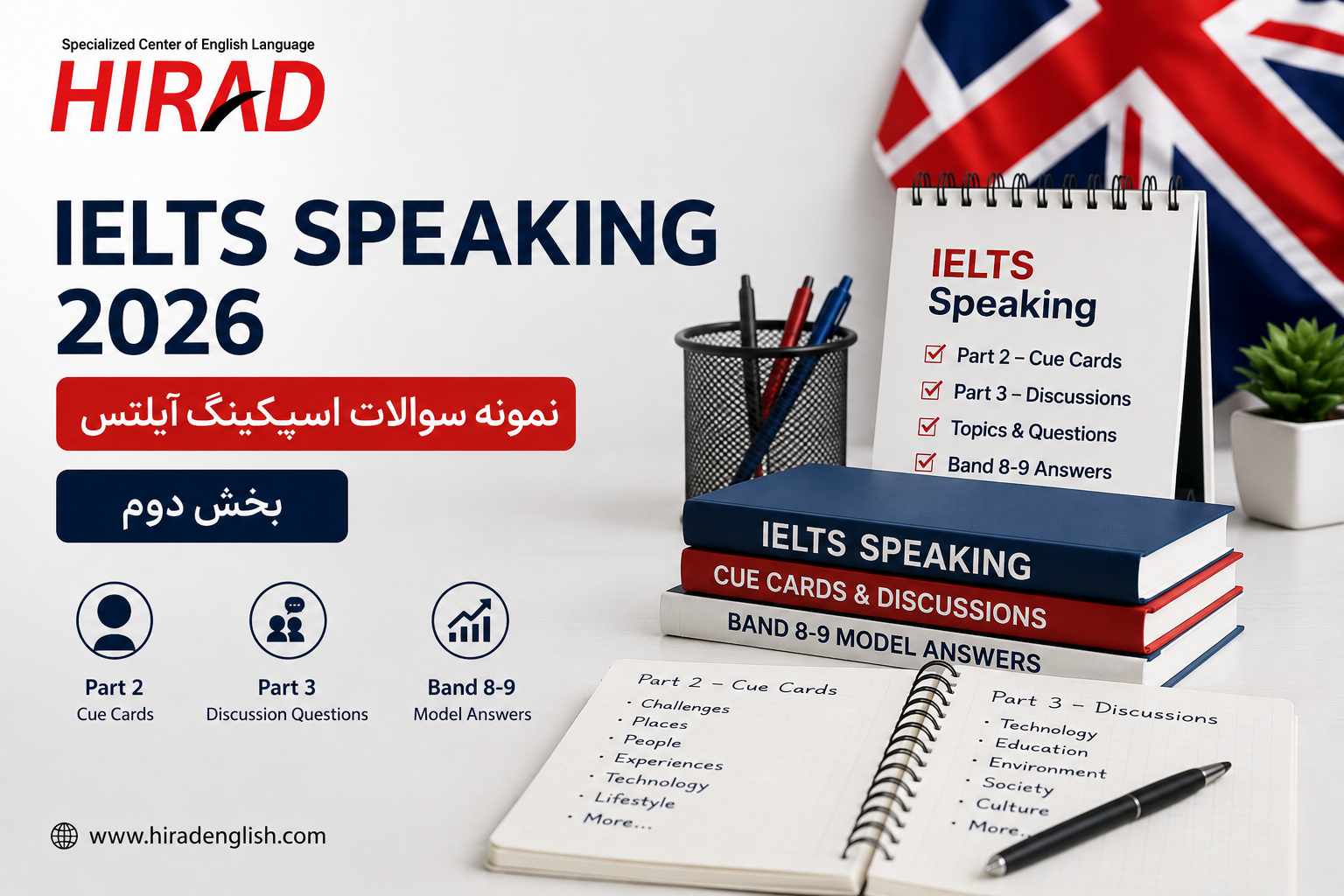
نمونه سوالات Speaking آیلتس در سال 2026 (بخش دوم) :
در بخش اول مقاله نمونه سوالات Speaking آیلتس در سال 2026، با تعدادی از موضوعات و سوالات رایج Part 1 آشنا شدیم و نمونه هایی از سوالات مربوط به موضوعاتی مانند خانه، محل زندگی، کار و تحصیل، خانواده، دوستان، اوقات فراغت، موسیقی، تکنولوژی، غذا، سفر و موضوعات روزمره را بررسی کردیم.
اما آمادگی برای آزمون Speaking آیلتس فقط به Part 1 محدود نمی شود. داوطلب باید بتواند در Part 2 درباره یک موضوع مشخص برای مدت طولانی صحبت کند و در Part 3 نیز درباره موضوعات کلی تر و انتزاعی تر نظر خود را بیان، تحلیل و از آن دفاع کند.
در این بخش، سراغ مجموعه ای از نمونه سوالات Speaking آیلتس در سال 2026 در Part 2 و Part 3 می رویم و علاوه بر سوالات، نمونه پاسخ هایی در سطح Band 8 و 9 را نیز بررسی می کنیم.
نکته مهم: سوالات Speaking آیلتس به صورت رسمی و عمومی توسط IELTS به عنوان «بانک سوالات قطعی آینده» منتشر نمی شوند. بنابراین عبارت هایی مانند «سوالات واقعی 2026» معمولا به سوالات گزارش شده توسط داوطلبان، موضوعات پرتکرار یا مجموعه های تمرینی اشاره دارند. سوالات این مقاله برای تمرین و آمادگی بیشتر تهیه شده اند و تضمینی برای تکرار عین آنها در آزمون آینده وجود ندارد.
Part 2 در آزمون Speaking آیلتس چیست ؟
در Part 2، ممتحن یک Task Card یا Cue Card در اختیار داوطلب قرار می دهد. داوطلب یک دقیقه برای آماده کردن پاسخ خود زمان دارد و سپس باید درباره موضوع مطرح شده صحبت کند.
در این بخش، هدف فقط پاسخ دادن به چند سوال کوتاه نیست؛ بلکه داوطلب باید بتواند یک صحبت منسجم و نسبتاً طولانی داشته باشد و ایده های خود را به شکل منطقی گسترش دهد.
در ساختار رسمی آزمون Speaking، کل آزمون حدود 11 تا 14 دقیقه طول می کشد و سه بخش دارد. IELTS نیز چهار معیار اصلی برای ارزیابی Speaking در نظر می گیرد: Fluency and Coherence، Lexical Resource، Grammatical Range and Accuracy و Pronunciation.
بنابراین در Part 2 بهتر است به جای حفظ کردن یک متن آماده، یاد بگیرید چگونه درباره موضوعات مختلف ایده پیدا کنید، مثال بزنید، جزئیات اضافه کنید و صحبت خود را به شکل طبیعی ادامه دهید.
جدیدترین نمونه سوالات Part 2 آیلتس 2026 ( بخش دوم ) :
در ادامه مجموعه ای از Cue Card های مهم و پرتکرار را می بینید که می توانند برای تمرین Speaking بسیار مفید باشند.
1. Describe a difficult challenge you faced :
You should say:
- What the challenge was
- When and where you faced it
- Why it was difficult
- And explain how you felt about it
این موضوع در گزارش های مربوط به آزمون های 2026 نیز دیده شده است.
2. Describe something that helps you save time :
You should say:
- What it is
- When you usually use it
- Why you use it
- And explain how it saves your time
این موضوع می تواند به وسایل، ابزارهای دیجیتال یا حتی یک عادت شخصی مربوط باشد. نکته مهم این است که بتوانید توضیح دهید چرا آن وسیله یا روش باعث صرفه جویی در زمان شما می شود.
3. Describe something important that you lost :
You should say:
- What it was
- How you lost it
- Why it was important
- And explain how you felt when you lost it
این Cue Card نیز در گزارش های مربوط به آزمون های 2026 دیده شده است.
4. Describe a park or garden in your city :
You should say:
- Where it is
- When you usually go there
- Who you go there with
- What it is like
- And explain why you like visiting it
5. Describe a person who likes buying things at low prices :
You should say:
- Who this person is
- What kinds of things they buy
- Where they usually shop
- And explain why they like buying inexpensive things
6. Describe a drawing or painting that you like :
You should say:
- What it is
- Where you saw it
- What it looks like
- Who created it
- And explain why you like it
7. Describe something you cannot live without :
به جز کامپیوتر یا تلفن همراه.
You should say:
- What it is
- How long you have had it
- How you use it
- And explain why you cannot live without it
این موضوع نیز در گزارش های آزمون Speaking سال 2026 دیده شده است.
8. Describe a popular or well-known person in your country :
You should say:
- Who the person is
- What he or she has done
- Why the person is famous
- And explain how you feel about this person
9. Describe a place away from your home that you would like to visit :
You should say:
- Where it is
- What it is like
- When you would like to go
- Who you would like to go with
- And explain why you want to visit it
10. Describe a time when you needed to search for information :
You should say:
- What information you needed
- Why you needed it
- Where you searched for it
- And explain whether you found the information useful
11. Describe an interesting animal you have seen :
You should say:
- What animal it was
- Where you saw it
- What it looked like
- What you know about it
- And explain why you found it interesting
12. Describe an old building you have seen :
You should say:
- Where it is
- What it looks like
- When you saw it
- What people use it for
- And explain why you found it interesting
13. Describe a piece of technology that is useful to you :
You should say:
- What it is
- When you started using it
- What you use it for
- And explain why it is useful
14. Describe an application that you use frequently :
You should say:
- What the application is
- How you use it
- When you started using it
- And explain why you find it useful
15. Describe a film that you enjoyed watching :
You should say:
- What the film was
- When you watched it
- What it was about
- Who you watched it with
- And explain why you enjoyed it
16. Describe a song that you like :
You should say:
- What the song is
- When you first heard it
- What it is about
- Where you usually listen to it
- And explain why you like it
17. Describe a teacher who had an important influence on you :
You should say:
- Who the teacher was
- When you studied with them
- What they taught you
- How they influenced you
- And explain why you remember this teacher
18. Describe a successful person you know :
You should say:
- Who the person is
- What they do
- How they became successful
- What you admire about them
- And explain why you consider them successful
19. Describe a time when you helped someone :
You should say:
- Who you helped
- What the problem was
- What you did
- And explain how you felt afterwards
20. Describe a time when someone helped you :
You should say:
- Who helped you
- What happened
- How they helped you
- And explain how you felt about their help
21. Describe a memorable trip you had :
You should say:
- Where you went
- Who you went with
- What you did
- What happened
- And explain why you remember the trip
22. Describe a beautiful place you have visited :
You should say:
- Where it was
- When you went there
- What it looked like
- What you did there
- And explain why you found it beautiful
23. Describe a place you have been to where things were expensive :
You should say:
- Where it was
- When you went there
- What was expensive
- What you bought or did there
- And explain how you felt about the prices
این نوع موضوع نیز در مجموعه های گزارش شده مربوط به Speaking در سال 2026 دیده شده است.
24. Describe something useful that you learned recently :
You should say:
- What you learned
- When you learned it
- How you learned it
- And explain why it was useful
25. Describe an important decision that was difficult to make :
You should say:
- What the decision was
- When you made it
- What choices you had
- And explain why it was difficult
26. Describe a time when you overcame difficulties and succeeded :
You should say:
- What you wanted to achieve
- What difficulties you faced
- What you did
- And explain how you felt after succeeding
27. Describe someone who is very good at something :
You should say:
- Who the person is
- What they are good at
- How you know them
- How they developed this ability
- And explain why you admire them
28. Describe an object that is useful in your daily life :
You should say:
- What it is
- How you use it
- When you got it
- And explain why it is useful
29. Describe a time when something surprised you :
You should say:
- What happened
- When it happened
- Where you were
- Who was with you
- And explain why you were surprised
30. Describe a place where you would like to live in the future :
You should say:
- Where it is
- What it is like
- What you would do there
- Who you would live with
- And explain why you would like to live there
نمونه پاسخ های Band 8 و 9 برای Speaking Part 2 :
داشتن نمونه پاسخ برای Cue Card ها می تواند به داوطلب کمک کند با نحوه گسترش ایده، استفاده از واژگان مناسب و ساختاردهی پاسخ آشنا شود.
البته این پاسخ ها نباید کلمه به کلمه حفظ شوند. هدف از استفاده از آنها، یادگیری روش پاسخ دادن و پیدا کردن ایده های مناسب برای موضوعات مختلف است.
نمونه پاسخ 1: A Difficult Challenge :
Question:
Describe a difficult challenge you faced.
You should say:
- What the challenge was
- When you faced it
- Why it was difficult
- And explain how you overcame it
Sample Answer – Band 8/9:
I’d like to talk about a particularly challenging period in my life when I had to balance several demanding responsibilities at the same time.
It happened a few years ago when I was working on an important project while also dealing with a number of personal commitments. The main difficulty was that I had very little free time, and I constantly felt that I was racing against the clock.
Initially, I tried to deal with everything simultaneously, but I soon realised that this approach was completely counterproductive. So, I started prioritising my responsibilities and divided the larger tasks into smaller, manageable steps. I also learned to say no to unnecessary commitments.
Eventually, I managed to complete the project successfully and, more importantly, I learned a valuable lesson about time management. Looking back, although it was an extremely stressful experience, it made me considerably more organised and resilient.
High-Level Vocabulary:
- balance several responsibilities
- race against the clock
- counterproductive
- prioritise
- manageable steps
- unnecessary commitments
- resilient
نمونه پاسخ 2: Something That Saves Your Time :
Question:
Describe something that helps you save time.
You should say:
- What it is
- How you use it
- When you started using it
- And explain why it saves you time
Sample Answer – Band 8/9:
One thing that saves me a considerable amount of time is a digital calendar and task-management application.
I use it to organise my appointments, set reminders and prioritise the things I need to accomplish during the day. I started using it seriously a few years ago when I realised that relying entirely on my memory was not an efficient way of managing a busy schedule.
What makes it particularly useful is that I can access it from different devices and receive reminders before important appointments or deadlines. It also allows me to break complicated projects down into smaller tasks.
As a result, I waste far less time trying to remember what I have to do next. More importantly, it gives me a clear sense of direction and helps me stay focused throughout the day.
High-Level Vocabulary:
- a considerable amount of time
- task-management application
- prioritise
- rely entirely on
- efficient
- deadline
- break something down into
- stay focused
نمونه پاسخ 3: Something Important You Lost :
Question:
Describe something important that you lost.
You should say:
- What it was
- When you lost it
- How you lost it
- And explain how you felt
Sample Answer – Band 8/9:
I’d like to talk about a watch that I lost several years ago. It wasn’t particularly expensive, but it had enormous sentimental value because it had been given to me by someone very close to me.
I remember losing it while I was travelling. I had been moving between several places during the day, and at some point I realised that it was no longer on my wrist. I retraced my steps and contacted the places I had visited, but unfortunately, I couldn’t find it.
I was genuinely devastated at first because the watch represented a personal memory rather than simply being a valuable possession. Although I eventually accepted that I would probably never get it back, the experience taught me to be much more careful with things that have sentimental value.
High-Level Vocabulary:
- sentimental value
- retrace my steps
- valuable possession
- represent a personal memory
- genuinely devastated
IELTS Speaking Part 3 چیست ؟
Part 3 مرحله ای است که در آن سوالات نسبت به Part 1 و Part 2 کلی تر، تحلیلی تر و انتزاعی تر می شوند.
در این بخش، سوالات معمولا با موضوع Part 2 ارتباط دارند، اما داوطلب دیگر فقط درباره تجربه شخصی خود صحبت نمی کند. از او خواسته می شود درباره مسائل اجتماعی، آموزشی، تکنولوژی، محیط زیست، خانواده، موفقیت و موضوعات مختلف نظر بدهد.
در منابع رسمی IELTS نیز هدف Part 3 بررسی توانایی داوطلب برای بیان و توجیه نظر، تحلیل، بحث و صحبت درباره مسائل انتزاعی مرتبط با موضوع Part 2 عنوان شده است.
بنابراین در این قسمت، پاسخ یک یا دو جمله ای معمولا کافی نیست. بهتر است پاسخ خود را با نظر + دلیل + توضیح + مثال + نتیجه گیری کوتاه گسترش دهید.
جدیدترین سوالات IELTS Speaking Part 3 در سال 2026 :
در ادامه به جدیدترین سوالات مربوط به IELTS Speaking Part 3 در سال 2026 اشاره میکنیم :
Topic: Technology :
- How has technology changed people’s daily lives?
- Do you think technology makes people more productive?
- Why do some people find it difficult to adapt to new technology?
- Will artificial intelligence change the way people work?
- What are the biggest disadvantages of technological development?
- Should children be allowed to use technology freely?
- Is society becoming too dependent on technology?
Topic: Education :
- What makes a good teacher?
- Should schools focus more on practical skills?
- Has technology improved education?
- What are the advantages of online education?
- Should students be allowed to use AI for learning?
- Why do some students perform better than others?
- What skills will students need in the future?
Topic: Work :
- What makes people satisfied with their jobs?
- Is salary more important than job satisfaction?
- Why do people change careers?
- Will remote work become more common?
- What jobs are likely to disappear because of technology?
- Should employers allow flexible working hours?
- What qualities make someone successful at work?
Topic: Architecture :
- How do buildings contribute to the beauty of a city?
- Should old buildings be preserved?
- Why do some people prefer modern architecture?
- What makes a building attractive?
- Should governments spend money preserving historic buildings?
- How might cities look different in the future?
موضوعات مربوط به معماری و ساختمان های قدیمی نیز در مجموعه سوالات گزارش شده سال های اخیر دیده شده اند.
Topic: Environment :
- What are the biggest environmental problems today?
- Who should be responsible for protecting the environment?
- Why do some people ignore environmental problems?
- Should governments punish companies that damage the environment?
- Can technology solve environmental problems?
- How can individuals reduce environmental damage?
- Should children learn more about environmental protection?
Topic: Animals :
- Why do people keep pets?
- Should wild animals be kept in zoos?
- Why are some animals becoming endangered?
- Should governments spend more money protecting wildlife?
- What can children learn from animals?
- How has people’s relationship with animals changed?
Topic: Art :
- Why is art important to society?
- Should children study art at school?
- What makes a painting valuable?
- Has modern technology changed the way people create art?
- Should governments financially support artists?
- Why do people have different opinions about art?
Topic: Travel :
- Why do people enjoy travelling?
- Has tourism changed in recent years?
- What are the benefits of international tourism?
- What problems can tourism cause?
- Should governments limit the number of tourists in popular destinations?
- Is travelling important for young people?
- How might tourism change in the future?
Topic: Social Media :
- What are the main disadvantages of social media?
- Does social media improve communication?
- Why do people share personal information online?
- Should social media companies be responsible for false information?
- How has social media changed relationships?
Topic: Happiness :
- What makes people happy?
- Is money necessary for happiness?
- Are people happier now than in the past?
- Why do some people have difficulty enjoying their lives?
- Should governments measure people’s happiness?
- What can people do to improve their quality of life?
Topic: Health :
- Why do some people find it difficult to maintain a healthy lifestyle?
- Should governments encourage people to exercise?
- How has modern life affected people’s health?
- Should schools teach children more about health?
- What are the main causes of unhealthy lifestyles?
- Is prevention more important than treatment?
Topic: Food :
- Why is fast food so popular?
- How have people’s eating habits changed?
- Should unhealthy food be more heavily taxed?
- Why do traditional foods remain important?
- Should schools teach children how to cook?
- Will people’s diets change significantly in the future?
Topic: Books and Reading :
- Why do some people enjoy reading?
- Are young people reading less than before?
- Are e-books better than printed books?
- How can schools encourage children to read?
- Can reading influence people’s opinions?
- What kinds of books will become popular in the future?
Topic: Music :
- Why is music important to people?
- Why do people’s musical tastes change?
- Can music influence people’s emotions?
- Should children learn music at school?
- Has technology changed the music industry?
- Why do some songs become internationally popular?
Topic: Cities :
- Why do people move from villages to cities?
- What are the biggest problems facing modern cities?
- Should governments encourage people to live outside large cities?
- How can cities become more environmentally friendly?
- What makes a city a good place to live?
- How will cities change in the future?
Topic: Family :
- How has family life changed in recent decades?
- Do parents spend enough time with their children?
- Why are family relationships important?
- Should children spend more time with older relatives?
- How has technology affected family communication?
- Are families becoming less close than in the past?
Topic: Friendship :
- What makes a good friendship?
- Is it easier to make friends nowadays?
- Has social media changed friendship?
- Can online friendships be as strong as real-life friendships?
- Why do some friendships last for many years?
- Is it better to have many friends or a few close friends?
Topic: Money and Shopping :
- Why do people enjoy shopping?
- Has online shopping changed people’s behaviour?
- Why do some people prefer cheap products?
- Should children learn how to manage money?
- Is consumerism a serious problem?
- Will physical shops disappear in the future?
Topic: Success :
- What does success mean to different people?
- Is money a good measure of success?
- Why are some people more successful than others?
- Can failure help people become successful?
- Should schools teach children how to become successful?
- Has the meaning of success changed?
10 نمونه سوال Speaking آیلتس با پاسخ Band 8 و 9 :
در ادامه چند نمونه دیگر را بررسی می کنیم تا تفاوت میان «سوال» و «پاسخ نمونه» کاملا مشخص باشد.
نمونه 1: Music :
Question:
Do you like listening to music?
Sample Answer – Band 8/9:
Absolutely. Music is an integral part of my daily routine. I usually listen to music when I’m commuting, working out, or simply trying to unwind after a hectic day. My taste is quite diverse, although I tend to gravitate towards songs with meaningful lyrics rather than music that is purely commercial. I think music has a remarkable ability to influence our mood and even bring back vivid memories.
Useful Vocabulary:
- an integral part of
- unwind
- gravitate towards
- meaningful lyrics
- influence our mood
- vivid memories
نمونه 2: Technology :
Question:
What piece of technology do you use most often?
Sample Answer – Band 8/9:
Without a doubt, my smartphone is the device I rely on the most. I use it for practically everything, from communicating with colleagues and keeping track of my schedule to reading the news and accessing educational content. What I find particularly convenient is that it allows me to accomplish tasks that used to require several different devices. Having said that, I try not to become overly dependent on it because excessive screen time can be quite distracting.
Useful Vocabulary:
- without a doubt
- rely on
- keep track of
- accomplish a task
- overly dependent on
- excessive screen time
نمونه 3: Home :
Question:
What do you like most about your home?
Sample Answer – Band 8/9:
What I appreciate most is the sense of comfort and privacy it provides. After a long and demanding day, I can come home and completely switch off from work-related responsibilities. I also particularly like the natural light in my living room, because it makes the whole place feel more spacious and welcoming. For me, a home isn’t merely a physical space; it’s somewhere I can genuinely relax and recharge.
Useful Vocabulary:
- a sense of comfort and privacy
- switch off from
- work-related responsibilities
- natural light
- spacious and welcoming
- recharge
نمونه 4: Free Time :
Question:
What do you usually do in your free time?
Sample Answer – Band 8/9:
It largely depends on how busy I am. If I have plenty of time on my hands, I enjoy reading, watching documentaries, or going for a long walk. On particularly hectic days, though, I tend to do something much less demanding, such as listening to music or catching up with friends. I think having some downtime is essential because otherwise people can easily become overwhelmed by their daily responsibilities.
Useful Vocabulary:
- plenty of time on my hands
- hectic
- less demanding
- catch up with friends
- downtime
- become overwhelmed
نمونه 5: Technology در Part 3 :
Question:
Do you think technology has made people’s lives easier?
Sample Answer – Band 8/9:
Yes, without question, technology has made many aspects of modern life considerably more convenient. People can now communicate instantly, access enormous amounts of information and complete everyday tasks within a matter of minutes.
However, I don’t think the impact has been entirely positive. Our increasing dependence on technology has created new problems, such as reduced face-to-face interaction, shorter attention spans and concerns about privacy.
So, I’d say technology itself isn’t necessarily good or bad. Its impact largely depends on how responsibly people use it. If we can benefit from technological advances without becoming overly dependent on them, I believe the advantages will far outweigh the disadvantages.
نمونه 6: Smartphones and Children :
Question:
Should children be allowed to use smartphones freely?
Sample Answer – Band 8/9:
I don’t think children should be given unrestricted access to smartphones. Although smartphones can be incredibly useful educational tools, excessive use can interfere with sleep, concentration and face-to-face social interaction.
That said, completely banning smartphones would probably be unrealistic. A more sensible approach would be to establish clear boundaries. Parents could, for instance, set daily screen-time limits and make sure that children spend enough time engaging in physical activities and socialising in the real world.
Ultimately, the goal shouldn’t be to prevent children from using technology, but rather to teach them how to use it responsibly.
High-Level Vocabulary:
- unrestricted access
- educational tools
- interfere with
- establish clear boundaries
- screen-time limits
- socialising
- use technology responsibly
نمونه 7: Success :
Question:
What makes a person successful?
Sample Answer – Band 8/9:
I don’t think success can be attributed to a single quality. In my view, successful people tend to combine several characteristics, including perseverance, self-discipline, adaptability and a willingness to learn from failure.
Talent can certainly give someone an advantage, but I don’t believe it is enough on its own. A highly talented person who lacks discipline may achieve less than someone with average ability who consistently works towards their goals.
I’d also argue that success should not be measured solely in financial terms. For some people, having a fulfilling career is important, whereas others may define success in terms of family, personal growth or making a positive contribution to society.
High-Level Vocabulary:
- be attributed to
- perseverance
- self-discipline
- adaptability
- learn from failure
- give someone an advantage
- fulfilling career
- personal growth
- make a positive contribution
چگونه برای Part 2 آیلتس پاسخ بهتری بدهیم ؟
یکی از اشتباهات رایج داوطلبان این است که تصور می کنند برای گرفتن نمره بالا باید یک متن بسیار پیچیده و پر از لغات دشوار حفظ کنند. در حالی که معیارهای رسمی IELTS فقط به استفاده از لغات سخت توجه نمی کنند؛ بلکه روانی و انسجام صحبت، دامنه و دقت واژگان، تنوع و دقت گرامری و تلفظ نیز ارزیابی می شوند.
برای تمرین Cue Card بهتر است پاسخ خود را به چند بخش ساده تقسیم کنید:
1. معرفی موضوع :
در ابتدای پاسخ مشخص کنید دقیقا درباره چه چیزی صحبت می کنید.
2. ارائه جزئیات :
به سوالات موجود در Cue Card پاسخ دهید و اطلاعات لازم را اضافه کنید.
3. مثال و توضیح :
اگر امکان دارد یک مثال، خاطره یا جزئیات مشخص به پاسخ اضافه کنید.
4. بیان احساس یا نتیجه :
در پایان توضیح دهید چرا موضوع برای شما مهم بوده یا چه نتیجه ای از آن گرفته اید.
این ساختار باعث می شود پاسخ شما منسجم تر باشد و احتمال تمام شدن ایده ها در میانه صحبت کاهش پیدا کند.
چگونه برای Part 3 آیلتس آماده شویم ؟
در Part 3، صرفا گفتن اینکه «I think yes» یا «I don’t agree» کافی نیست. باید بتوانید نظر خود را توضیح دهید.
یک الگوی ساده برای تمرین می تواند این باشد:
Opinion → Reason → Explanation → Example → Conclusion
برای مثال، اگر از شما پرسیده شود:
Do you think technology makes people’s lives easier?
می توانید ابتدا نظر خود را بیان کنید، سپس دلیل بیاورید، دلیل را توضیح دهید، یک مثال بزنید و در نهایت یک نتیجه کوتاه ارائه کنید.
این روش به شما کمک می کند پاسخ های خود را طبیعی تر و کامل تر کنید.
آیا سوالات Speaking آیلتس 2026 قابل پیش بینی هستند ؟
تا حدی می توان موضوعات پرتکرار و ترند را شناسایی کرد، اما نمی توان با قطعیت گفت که یک سوال مشخص در آزمون آینده خواهد آمد.
به همین دلیل، بهتر است داوطلبان به جای حفظ کردن پاسخ برای چند سوال محدود، مجموعه متنوعی از موضوعات را تمرین کنند.
موضوعاتی مانند Technology، Education، Work، Family، Travel، Environment، Social Media، Food، Music، Art، Health، Success و Cities می توانند برای تمرین بسیار مفید باشند.
نکته مهم این است که یک موضوع ممکن است با تغییر جزئی دوباره مطرح شود. بنابراین داشتن ایده و واژگان قابل استفاده در چند موضوع مختلف، بسیار ارزشمندتر از حفظ کردن یک پاسخ ثابت است.
نکات مهم برای رسیدن به Band 8 و 9 در Speaking :
برای رسیدن به نمرات بالا، باید چهار معیار اصلی ارزیابی Speaking را جدی بگیرید:
Fluency and Coherence :
باید بتوانید بدون مکث های غیرضروری و قطع شدن مداوم صحبت کنید و ایده های خود را به شکل منطقی به هم مرتبط کنید.
Lexical Resource :
استفاده از دامنه مناسبی از واژگان، انتخاب درست کلمات و توانایی Paraphrase کردن اهمیت زیادی دارد.
Grammatical Range and Accuracy :
فقط استفاده از جملات پیچیده کافی نیست. باید بتوانید ساختارهای مختلف را با دقت مناسب استفاده کنید.
Pronunciation :
هدف این نیست که حتما لهجه خاصی داشته باشید؛ بلکه صحبت شما باید برای شنونده قابل فهم باشد.
این چهار معیار در ارزیابی رسمی IELTS اهمیت یکسان دارند و نمره Speaking بر اساس عملکرد داوطلب در همین چهار حوزه تعیین می شود.
آیا باید پاسخ های Band 8 و 9 را حفظ کنیم ؟
خیر. پاسخ های نمونه این مقاله برای الگوبرداری هستند. اگر یک پاسخ را کلمه به کلمه حفظ کنید، ممکن است هنگام مواجه شدن با سوالی کمی متفاوت، نتوانید پاسخ خود را به شکل طبیعی تغییر دهید.
بهتر است از نمونه پاسخ ها برای یادگیری موارد زیر استفاده کنید:
- ساختار پاسخ
- نحوه گسترش ایده
- واژگان کاربردی
- Collocation های مناسب
- نحوه استفاده از مثال
- روش بیان نظر
- نحوه مقایسه
- روش توضیح علت و معلول
- نحوه صحبت درباره تجربه شخصی
هدف اصلی این است که بتوانید درباره یک موضوع، با زبان خودتان صحبت کنید.
جمع بندی نمونه سوالات Speaking آیلتس در سال 2026 :
در این دو بخش، مجموعه گسترده ای از نمونه سوالات Speaking آیلتس در سال 2026 را بررسی کردیم. در بخش اول بیشتر روی سوالات Part 1 و موضوعات آشنا و روزمره تمرکز داشتیم و در این بخش، Cue Card های Part 2 و سوالات تحلیلی Part 3 را بررسی کردیم.
همچنین نمونه پاسخ هایی در سطح Band 8 و 9 ارائه شد تا داوطلب فقط با خود سوالات آشنا نشود، بلکه نحوه گسترش پاسخ و استفاده از واژگان مناسب را نیز یاد بگیرد.
برای آمادگی بهتر، پیشنهاد می شود:
- سوالات Part 1 را طبیعی و بدون حفظ کردن پاسخ تمرین کنید.
- برای هر Cue Card بتوانید حدود دو دقیقه صحبت کنید.
- برای Part 3 روی بیان نظر، دلیل، مثال، مقایسه و پیش بینی تمرکز کنید.
- پاسخ های آماده را کلمه به کلمه حفظ نکنید.
- برای موضوعات مشترک، Vocabulary و ایده های قابل استفاده در چند سوال آماده کنید.
- هنگام تمرین صدای خود را ضبط کنید و میزان مکث، تکرار، تلفظ و انسجام پاسخ را بررسی کنید.
- فقط روی «سوالات احتمالی 2026» تمرکز نکنید و توانایی صحبت درباره موضوعات مختلف را تقویت کنید.
آمادگی برای IELTS Speaking در آموزشگاه زبان هیراد :
اگر هدف شما کسب نمره مناسب در آزمون IELTS است، تمرین سوالات Speaking به تنهایی کافی نیست. برای پیشرفت واقعی باید بتوانید در شرایط شبیه سازی شده آزمون صحبت کنید، بازخورد بگیرید و نقاط ضعف خود را در زمینه Fluency، Vocabulary، Grammar و Pronunciation اصلاح کنید.
در آموزشگاه زبان هیراد، تمرکز دوره های آمادگی آیلتس می تواند به داوطلب کمک کند تا علاوه بر آشنایی با ساختار آزمون، مهارت واقعی Speaking خود را نیز تقویت کند.
اگر قصد شرکت در آزمون آیلتس را دارید، پیشنهاد می شود قبل از انتخاب دوره، سطح فعلی زبان، هدف نمره و زمان باقی مانده تا آزمون را در نظر بگیرید.
برای آشنایی با دوره های آیلتس آموزشگاه هیراد و دریافت اطلاعات بیشتر درباره شرایط ثبت نام، می توانید با آموزشگاه تماس بگیرید.
منابع معتبر برای ساختار آزمون Speaking :
برای بررسی ساختار رسمی آزمون و معیارهای ارزیابی Speaking، بهتر است از منابع رسمی IELTS استفاده شود.
نکته: منابع رسمی IELTS ساختار آزمون، نحوه ارزیابی و معیارهای نمره دهی را توضیح می دهند؛ اما سوالات آینده آزمون را به عنوان یک بانک سوال قطعی منتشر نمی کنند. بنابراین نمونه سوالات 2026 موجود در منابع آموزشی باید به عنوان ابزار تمرین و آمادگی استفاده شوند، نه سوالات تضمینی آزمون.
آموزشگاه زبان هیراد با ارائه دوره های آموزشی مختلف، می تواند یکی از گزینه هایی باشد که زبان آموزان برای شروع یا ادامه مسیر یادگیری زبان انگلیسی بررسی می کنند.
ثبت نام دوره های حضوری و آنلاین :
اگر قصد دارید مکالمه زبان انگلیسی خود را تقویت کنید و به دنبال یک دوره منظم و سطح بندی شده هستید میتوانید در دوره های آموزشی زبان انگلیسی هیراد با سیستم جدید ورژن 2026 ثبت نام کنید .
برای مشاوره دوره های آموزش زبان انگلیسی هیراد با شماره 09123341513 یا 26412912-021 تماس بگیرید و مسیر آمادگی خود را متناسب با سطح و هدف خود انتخاب کنید.
برای دریافت مشاوره رایگان، انتخاب دوره و آشنایی با دوره های حضوری و آفلاین ، همین امروز با کارشناسان ما تماس بگیرید.
برای خرید دوره های آموزشی حضوری و آفلاین اول مشاوره بگیرید:
اگر نمی دانید در چه سطحی هستید یا نمی دانید کدام دوره برای هدف شما مناسب تر است، لازم نیست بین دوره های مختلف سردرگم شوید.
در آموزشگاه زبان هیراد می توانید برای رزرو تعیین سطح زبان انگلیسی و دریافت مشاوره رایگان اقدام کنید.
مشاوران هیراد با بررسی سطح، هدف و شرایط شما کمک می کنند مسیر مناسب خود را انتخاب کنید.
همین حالا برای رزرو تعیین سطح و مشاوره رایگان با هیراد تماس بگیرید و اولین قدم مسیر یادگیری زبان انگلیسی خود را آگاهانه بردارید.
پس از تعیین سطح و مشاوره آموزشی می توانید مسیر مناسب خود را انتخاب کنید و بعد برای خرید دوره اقدام کنید.
همین حالا دوره های هیراد را مشاهده کنید و مسیر مناسب خود برای تقویت زبان انگلیسی شروع کنید.
تعیین سطح زبان و دریافت مشاوره آموزشی هیراد، اولین قدم برای انتخاب درست برای شرکت در کلاس های حضوری و آفلاین آموزشگاه می باشد .
اگر آماده شروع یادگیری هستید:
ثبت نام در کلاس های حضوری آموزشگاه زبان هیراد یا خرید دوره های آفلاین آموزش زبان انگلیسی هیراد اولین قدم را برای رسیدن به اهداف زبانی خود بردارید.
مشاوره رایگان آموزشگاه زبان هیراد بهترین انتخاب برای مسیر یادگیری زبان :
نمی دانید کدام دوره زبان برای سطح و هدف شما مناسب است؟ با 09123341513 تماس بگیرید یا در واتساپ همین شماره پیام دهید تا کارشناسان ما پس از بررسی شرایط و نیازهای شما، بهترین مسیر آموزشی را پیشنهاد دهند.
همین حالا برای تعیین سطح زبان انگلیسی و دریافت مشاوره رایگان با هیراد تماس بگیرید و مسیر یادگیری خود را درست شروع کنید.
مشاوران ما در مرکز زبان هیراد هم اکنون آماده پاسخگویی به سوالات شما دراین زمینه می باشند.
ارتباط در واتس اپ: کارشناسان آنلاین

ساعت کاری این بخش: 9 الی 20:30










جستجو
دستهها
لینک های مهم
مشاوران ما در مرکز زبان هیراد هم اکنون آماده پاسخگویی به سوالات شما می باشند.
ارتباط در واتس اپ: کارشناسان آنلاین
ساعت کاری این بخش: 9 الی 20:30
